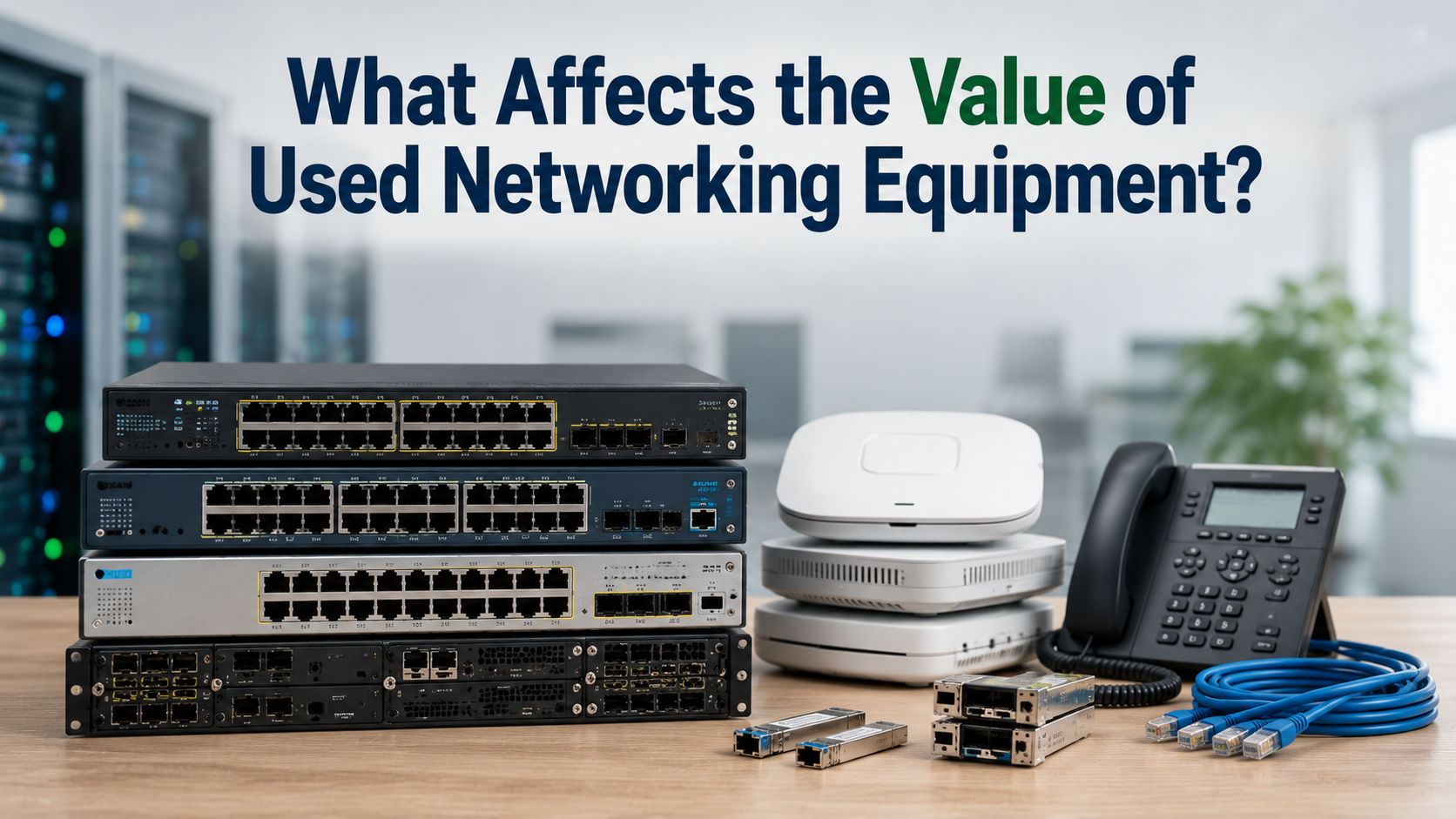
Used networking equipment can retain considerable value, but its price is rarely determined by age alone. Businesses often replace switches, servers, routers, access points, and other devices when upgrading their IT infrastructure. Instead of leaving these items unused, selling them can help recover part of their original investment.
Several factors influence what a buyer may offer. Brand, model, technical specifications, working condition, demand, quantity, accessories, and physical appearance can all affect the final valuation. Understanding these factors can help businesses prepare their equipment properly and approach the selling process with realistic expectations.
1. Brand and Manufacturer
The manufacturer is one of the first factors considered when assessing networking equipment. Well-established brands often have stronger demand because businesses are familiar with their reliability, compatibility, and technical support. Networking equipment from manufacturers such as Cisco, HPE, Dell, Juniper, Aruba, and similar established brands may attract attention depending on the specific model and condition.
However, brand name alone does not guarantee a high price. The exact model, specifications, age, and market demand also matter. Before requesting a valuation, sellers should record the manufacturer and model number of every device.
2. Model and Technical Specifications
Two networking devices from the same manufacturer can have significantly different values because their technical specifications may vary.
Important specifications can include:
- Number of ports
- Port speed
- Ethernet standards
- PoE support
- Management capabilities
- Processing capacity
- Storage capacity for applicable devices
- Connectivity options
- Expansion capabilities
Enterprise-grade equipment with advanced features may attract stronger demand than basic devices designed for small offices. Providing complete technical information allows buyers to evaluate the equipment more accurately.
3. Working Condition
The operating condition of networking equipment has a direct impact on its potential value. Fully functional devices generally have different market value compared with damaged or non-working units. Sellers should check whether equipment powers on and whether its major functions work correctly. For switches and routers, ports, indicators, power supplies, and basic connectivity may be relevant.
However, sellers should not attempt complicated repairs simply to increase the price. Repairs can sometimes cost more than the potential increase in value.
Non-working equipment can still have value depending on its model, components, and condition. Therefore, damaged equipment should still be disclosed when requesting an offer.
4. Age and Technology
Technology changes quickly. Networking equipment that was widely used several years ago may have lower demand when newer standards and faster devices become available. Older equipment can still be valuable if it remains compatible with existing infrastructure or has continued demand in certain markets. However, outdated technology may reduce the number of potential buyers.
Businesses should therefore avoid assuming that old equipment has no value. A professional assessment can determine whether a particular device still has commercial demand.
5. Current Market Demand
Market demand is another important factor. The value of networking equipment can change depending on what businesses currently need.
For example, a particular enterprise switch may attract buyers if organizations continue using the same model across their networks. On the other hand, equipment with limited compatibility or outdated specifications may receive lower offers. This is why networking equipment buyers consider more than the original purchase price. The current demand and practical usability of the equipment are important when determining its present value.
6. Quantity of Equipment
The quantity being sold can also influence the selling process. Businesses often have multiple switches, servers, routers, and related devices after an infrastructure upgrade.
A bulk networking equipment buyer may evaluate large inventories together rather than treating every device as a separate transaction. Before contacting a buyer, businesses should prepare an inventory showing the equipment type, brand, model, quantity, and condition. This makes the assessment easier and helps the buyer understand the size of the transaction.
Bulk equipment can also make collection more convenient because multiple devices can potentially be handled during one scheduled visit.
7. Physical Condition
The physical appearance of networking equipment can affect its valuation. Devices with significant damage, broken ports, missing panels, corrosion, or other physical issues may receive a different offer from equipment in good condition. Minor scratches or signs of normal use are generally different from serious physical damage. Sellers should provide clear photographs when requesting an initial assessment.
Being transparent about the condition prevents misunderstandings during the final inspection and helps create a smoother transaction.
8. Accessories and Components
Accessories can also influence the value and convenience of a transaction. Power cables, adapters, mounting brackets, power supplies, and other original components may be useful to buyers. For servers, components such as processors, memory, storage drives, and power supplies can be relevant to the assessment.
For this reason, sellers should avoid throwing away accessories before contacting a buyer. Keeping related components together can make inventory preparation easier.
Turn Unused Networking Equipment Into Value With IT Scrap Buyer
IT Scrap Buyer helps businesses and individuals sell unwanted networking equipment through a straightforward buying process. Whether you have old switches, servers, routers, or other IT devices, our team can assess your equipment based on its condition, specifications, quantity, and market relevance. We support individual sellers as well as businesses managing larger inventories.
Our process focuses on clear communication, convenient collection, and timely payment. If your organization has equipment sitting unused after an IT upgrade, office relocation, or infrastructure replacement, contact IT Scrap Buyer to discuss your available devices and selling requirements. We also purchase other technology categories, making us a convenient choice for businesses searching for a gaming desktops buyer alongside their networking equipment.
Frequently Asked Questions
Yes. Brand can influence demand and value, but buyers also consider the exact model, technical specifications, working condition, age, market demand, and available accessories.
Yes. Non-working networking equipment may still be purchased. Its value depends on the model, internal components, physical condition, quantity, age, and potential demand for parts.
Yes. Businesses with multiple switches, servers, routers, or related devices can sell them together, making evaluation and collection more convenient while simplifying the overall selling process.
Provide the brand, model number, quantity, condition, photographs, technical specifications, and location. Complete and accurate information helps buyers understand your inventory and provide a more suitable assessment.
Yes. Businesses can sell surplus networking equipment after upgrades, relocations, closures, or infrastructure changes. Preparing an inventory beforehand can make valuation, collection, and payment faster and easier.